Student Debt Repayment in 2026: An Educational Module on Navigating the Repayment Assistance Plan
Advertisements

Managing post-graduation finances can feel overwhelming as monthly obligations begin to roll in. If you are balancing life after graduation, mastering Student Debt Repayment in Canada is the single best way to protect your budget without accumulating unpaid interest.
Fortunately, the federal Repayment Assistance Plan (RAP) offers a powerful safety net tailored directly to your earnings. Depending on your income and household size, your monthly contribution can drop significantly—or even be set to zero—while the government covers outstanding interest.
Whether you want to ease your current cash flow or pay down your education balance faster, knowing how to leverage this program is essential. Here is your practical guide to navigating RAP and taking control of your financial future.
Understanding the Repayment Assistance Plan (RAP) in 2026
The Repayment Assistance Plan (RAP) continues to be a critical program for Canadian students facing challenges with their federal loan obligations. As 2026 approaches, understanding the nuances of this program is essential for effective financial planning.
RAP is designed to make Canada Student Loans more affordable by reducing monthly payments to an amount borrowers can reasonably manage. This ensures that financial hardship does not prevent individuals from repaying their student debt.
The program adapts to a borrower’s financial situation, taking into account income, family size, and other relevant factors. This flexibility is key to its effectiveness in supporting graduates across the country.
Eligibility Criteria for Student Debt Repayment in 2026
Eligibility for the Repayment Assistance Plan hinges on several factors, primarily a borrower’s income relative to their family size. The government sets specific thresholds to determine who qualifies for reduced payments.
Borrowers must apply for RAP, and their eligibility is reassessed every six months. This regular review ensures that the assistance provided remains appropriate for their current financial circumstances.
Maintaining good standing with federal student loans, even while on RAP, is crucial. Defaulting on loans can lead to significant long-term financial consequences, underscoring the importance of understanding all aspects of Student Debt Repayment in 2026.
Key Income Thresholds and Family Size Considerations
- Income levels are assessed against federal poverty lines, adjusted for family size.
- Larger families generally have higher income thresholds for eligibility.
- Spousal income is also considered in the assessment for married or common-law partners.
Maintaining Good Standing and Avoiding Default
- Regularly submitting RAP applications every six months prevents payments from reverting to full amounts.
- Communicating any significant changes in income or family situation to the National Student Loans Service Centre (NSLSC) is vital.
- Understanding the terms and conditions of federal student loans helps borrowers navigate their obligations effectively.
Application Process for Repayment Assistance
Applying for the Repayment Assistance Plan is a straightforward process, primarily managed through the National Student Loans Service Centre (NSLSC) online portal. This digital approach streamlines the application for many.
Borrowers need to provide up-to-date financial information, including income verification and details about their family composition. Accurate and complete submissions are crucial for timely processing.
Once an application is submitted, NSLSC reviews the information and determines the appropriate monthly payment amount, or if no payment is required. This decision directly impacts the borrower’s Student Debt Repayment.
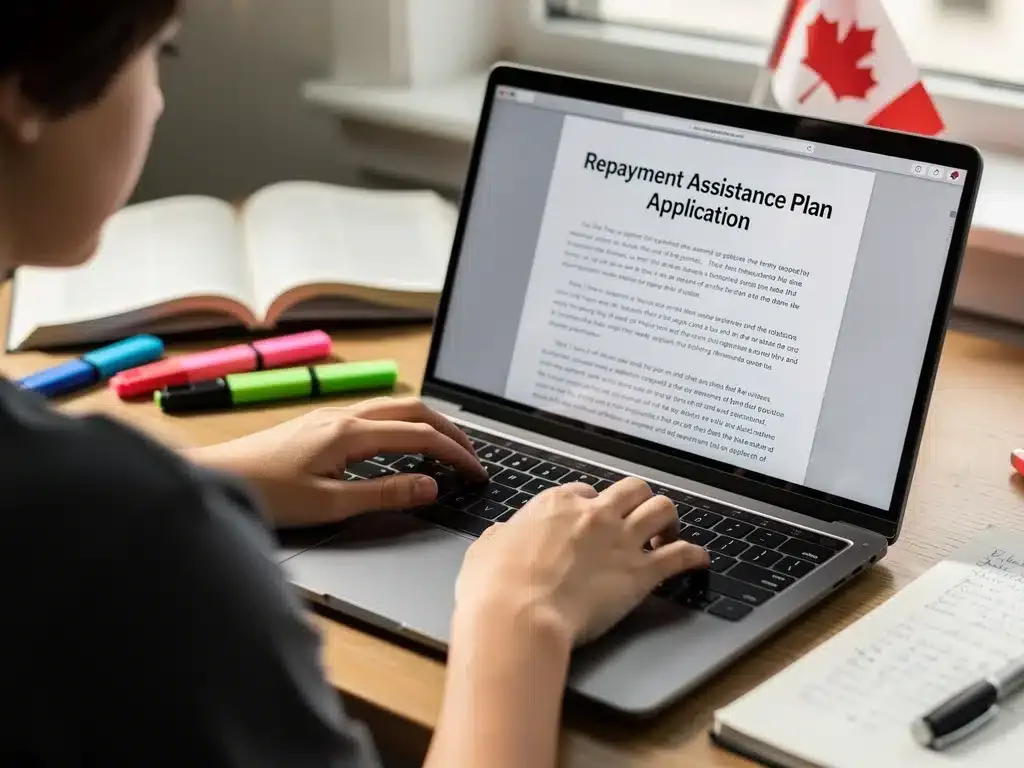
Steps to Complete Your RAP Application Online
Accessing the NSLSC online account is the first step, where the RAP application form is readily available. The portal guides users through each required section, ensuring all necessary details are captured.
Gathering all supporting documents, such as recent pay stubs or tax assessments, before starting the application can expedite the process. This preparation minimizes delays and ensures accuracy.
Reviewing the completed application thoroughly before submission is highly recommended to correct any errors. A precise application ensures a quicker and smoother determination of eligibility for Repayment Assistance.
Benefits and Features of RAP for Student Debt Repayment 2026
The Repayment Assistance Plan offers significant benefits, primarily by reducing the financial burden of student loans for eligible Canadians. This reduction can free up funds for other essential living expenses.
One of the key features is the potential for the government to cover the interest portion of a borrower’s loan that their reduced payment doesn’t cover. This prevents the loan balance from growing due to interest accumulation.
For those in severe financial difficulty, RAP can even lead to no required monthly payments at all, with the government covering both principal and interest. This level of support is invaluable for managing Student Debt Repayment in 2026.
Interest Relief and Principal Reduction Mechanisms
- The government pays the interest on the borrower’s behalf if their income is below a certain threshold.
- After a certain period on RAP, or if income remains very low, the government may also begin paying down the principal.
- These mechanisms prevent student debt from becoming an insurmountable obstacle to financial stability.
Long-Term Impact on Financial Health
- Reduced stress and improved ability to meet other financial obligations, such as rent and groceries.
- Avoidance of default, preserving credit rating and future borrowing capacity.
- A clearer path to eventual loan repayment, even for those with lower incomes.
Navigating Challenges and Common Misconceptions
Despite its benefits, some borrowers face challenges or hold misconceptions about the Repayment Assistance Plan. Understanding these can help ensure a smoother experience with Student Debt Repayment.
A common misconception is that applying for RAP negatively impacts one’s credit score. In reality, being on RAP and making the required payments (even if zero) is considered maintaining good standing, which can positively affect credit.
Another challenge can be the six-month reapplication cycle, which requires borrowers to stay vigilant about their deadlines. Missing a reapplication can result in payments reverting to the full amount, potentially causing financial strain.
Addressing Credit Score Concerns and Financial Health
Participating in RAP demonstrates responsible debt management, as it prevents default. This proactive approach to managing student loans is viewed favourably by credit bureaus, contrary to some beliefs.
It allows individuals to allocate funds to other essential needs, thereby stabilizing their overall financial situation. This stability is a key component of long-term financial health and growth.
By preventing loan default, RAP helps preserve access to future credit opportunities, such as mortgages or car loans. This protective aspect is a significant, often overlooked, benefit of the program.
Resources and Support for Student Debt Repayment in 2026
Numerous resources are available to help Canadian students navigate their debt repayment, particularly concerning the Repayment Assistance Plan. These supports are designed to provide clarity and practical guidance.
The National Student Loans Service Centre (NSLSC) website is the primary hub for information, applications, and account management. It offers comprehensive details on RAP and other repayment options.
Financial literacy workshops and counselling services, often offered by post-secondary institutions or non-profit organizations, also provide valuable assistance. These resources can demystify the complexities of Student Debt Repayment in 2026.
Official Government and Institutional Support
- The Government of Canada website provides official policies and updates regarding student loans and repayment programs.
- University and college financial aid offices often have staff dedicated to assisting students with repayment inquiries and RAP applications.
- Toll-free helplines and online chat services from NSLSC offer direct support for specific questions and technical assistance.
Financial Literacy and Debt Management Counselling
- Workshops cover topics like budgeting, debt consolidation, and understanding interest rates.
- One-on-one counselling provides personalized advice tailored to individual financial situations.
- These services empower borrowers to make informed decisions about their student debt repayment.
Future Outlook for Student Debt Repayment in Canada
The landscape of student debt repayment in Canada is continually evolving, with ongoing discussions about potential policy adjustments and enhancements to programs like RAP. As 2026 approaches, monitoring these developments is prudent.
Advocacy groups and government bodies regularly review the effectiveness of current repayment strategies, seeking ways to improve accessibility and fairness. These evaluations could lead to future changes in eligibility or benefits.
Staying informed about legislative changes and program updates is crucial for anyone managing student loans. This proactive approach ensures borrowers can adapt to new conditions for Student Debt Repayment in 2026.
Maximizing Benefits and Proactive Planning
To maximize the benefits of the Repayment Assistance Plan and ensure a smooth student debt repayment journey, proactive planning is essential. This involves understanding your financial situation and utilizing available tools.
Regularly reviewing your budget and financial goals helps you anticipate when you might need to apply or reapply for RAP. This foresight prevents last-minute stress and potential payment disruptions.
Engaging with financial advisors or utilizing online calculators can provide personalized insights into your repayment strategy. Such resources can clarify how RAP fits into your broader financial picture, especially regarding Student Debt Repayment in 2026.
Budgeting and Financial Goal Integration with RAP
Incorporating RAP payments into your monthly budget allows for better financial predictability. Understanding how reduced payments impact cash flow is crucial for overall financial health.
Setting realistic repayment goals, even while on RAP, provides a roadmap for becoming debt-free. These goals can be adjusted as your financial situation evolves, offering flexibility.
Considering how RAP integrates with other financial goals, such as saving for a down payment or retirement, ensures a holistic approach to personal finance. This integration is vital for long-term stability.
| Key Aspect | Description |
|---|---|
| RAP Eligibility | Based on income and family size, reviewed every six months. |
| Application Process | Online via NSLSC, requiring accurate financial documentation. |
| Program Benefits | Reduced payments, interest relief, and potential principal reduction. |
| Future Outlook | Ongoing policy reviews may lead to changes in RAP terms. |
Frequently Asked Questions About Student Debt Repayment in 2026
What is the Repayment Assistance Plan (RAP)?▼The Repayment Assistance Plan (RAP) is a Canadian government program designed to help borrowers struggling with federal student loan payments. It adjusts monthly payments based on income and family size, potentially reducing them or setting them to zero to prevent default and financial hardship.
How do I qualify for RAP in 2026?▼To qualify for RAP in 2026, your income must fall below specific thresholds relative to your family size. You must apply through the National Student Loans Service Centre (NSLSC) and reapply every six months to maintain eligibility, ensuring your financial situation is continuously assessed.
Does RAP affect my credit score?▼No, participating in RAP and making your adjusted payments (even if zero) does not negatively affect your credit score. In fact, it helps you maintain good standing with your loans, preventing default and preserving your credit health, which is beneficial for future financial endeavours.
What if my income changes while on RAP?▼If your income significantly changes while on RAP, you should inform the NSLSC promptly. They can reassess your payment obligations to ensure they remain appropriate for your current financial situation, preventing payment shocks or overpayments. Timely updates are crucial.
Where can I find more information about RAP?▼The primary source for more information on RAP is the National Student Loans Service Centre (NSLSC) website. You can also consult the Government of Canada’s official student aid pages or contact your post-secondary institution’s financial aid office for guidance and support.
What This Means for Canadian Borrowers
The availability and structure of the Repayment Assistance Plan remain a cornerstone of federal student loan support for Canadians.
Understanding Student Debt Repayment in 2026 empowers borrowers to manage their financial obligations effectively, avoiding the severe consequences of default.
As economic conditions and government policies evolve, staying informed about RAP updates is not merely beneficial but essential.
This proactive engagement ensures that individuals can adapt their repayment strategies to best suit their circumstances and maximize the support available.
The emphasis on accessible information and continuous support reinforces the government’s commitment to helping graduates achieve financial stability. Borrowers are encouraged to utilize all available resources to navigate their student debt journey successfully in 2026 and beyond.