Maximizing 2026 HSA Limit: $4,300 Pre-Tax Healthcare Savings
Advertisements
Unlocking maximum tax-advantaged growth for your healthcare expenses starts with taking full advantage of updated federal contribution caps. Maximizing 2026 HSA Limit rules allows eligible account holders to protect up to $4,300 in pre-tax earnings while building long-term medical emergency reserves.
Health savings vehicles offer a powerful triple tax advantage, allowing pre-tax deposits to grow tax-free and be withdrawn tax-exempt for qualified medical costs. Capitalizing on high-deductible health plan features enables savvy investors to combine short-term out-of-pocket spending shields with long-term investment portfolios.
Optimizing your annual healthcare allocation strategy ensures you capture maximum tax savings while securing your long-term wellness fund. Here is how to structure your pre-tax payroll contributions and leverage updated IRS limits throughout the year.
Understanding the 2026 HSA Contribution Limit Increase
The IRS recently unveiled the new contribution limits for Health Savings Accounts for the 2026 calendar year, marking a notable increase from previous years. This adjustment reflects ongoing inflation and aims to provide greater financial flexibility for individuals enrolled in high-deductible health plans (HDHPs).
For self-only coverage, the 2026 HSA contribution limit will be $4,300, while those with family coverage will see a limit of $8,550. Additionally, the catch-up contribution for individuals aged 55 and over remains an extra $1,000, further enhancing their savings potential.
These updated figures are critical for anyone planning their healthcare expenditures and seeking to optimize their tax strategy. The increase in the 2026 HSA contribution limit underscores the government's recognition of the importance of these accounts in managing healthcare finances.
Eligibility Requirements for 2026 HSA Contributions
To contribute to an HSA in 2026, individuals must be covered under a High-Deductible Health Plan (HDHP) and not be enrolled in Medicare. The HDHP must meet specific criteria regarding its deductible and out-of-pocket maximums set by the IRS.
For 2026, an HDHP must have a minimum deductible of $1,650 for self-only coverage and $3,300 for family coverage. The annual out-of-pocket maximums are capped at $8,300 for self-only coverage and $16,600 for family coverage, including deductibles, co-payments, and other amounts.
It is essential to verify that your health plan qualifies as an HDHP before planning your contributions to the 2026 HSA contribution limit. Consulting with your health insurance provider or a financial advisor can help confirm your eligibility and ensure compliance with IRS regulations.
Key HDHP Criteria for 2026
Minimum deductible: $1,650 (self-only), $3,300 (family)
Maximum out-of-pocket: $8,300 (self-only), $16,600 (family)
No other health coverage (with some exceptions like dental/vision)
Individuals must also not be claimed as a dependent on someone else's tax return. These stringent eligibility rules ensure that HSAs are utilized by those who truly benefit from their design as a savings vehicle for high-deductible plans.
The Triple Tax Advantage of HSAs
One of the most compelling reasons to utilize an HSA is its unique triple tax advantage, offering benefits that few other savings vehicles can match. This makes Maximizing the 2026 HSA Contribution Limit an exceptionally smart financial move.
Firstly, contributions to an HSA are tax-deductible, reducing your taxable income in the year they are made. This immediate tax break can lead to significant savings, especially for those in higher tax brackets, directly impacting your annual tax liability.
Secondly, the funds within an HSA grow tax-free. Any interest, dividends, or capital gains earned on investments held within the account are not subject to federal income tax. This allows your savings to compound more rapidly over time, building a substantial sum for future healthcare needs.
Thirdly, qualified withdrawals for eligible medical expenses are completely tax-free. This means you pay no taxes when you take money out to cover medical, dental, or vision costs.
This combination of pre-tax contributions, tax-free growth, and tax-free withdrawals creates a powerful financial tool for healthcare planning, especially when Maximizing the 2026 HSA Contribution Limit of $4,300 for Pre-Tax Healthcare Savings.
Strategies for Maximizing Your 2026 HSA Contributions
To fully leverage the increased 2026 HSA contribution limit, proactive planning and strategic approaches are essential. Simply contributing the maximum amount is a good start, but there are additional tactics to consider for optimal benefits.
One effective strategy is to front-load your contributions at the beginning of the year, if financially feasible. This allows your funds more time to grow tax-free through investments, accelerating the compounding effect. Many employers offer payroll deductions, making consistent contributions easier.
Another approach involves utilizing the "last-month rule," which allows individuals who become HSA-eligible mid-year to contribute the full annual amount if they remain eligible for the entire following year. This provides flexibility for those whose health plan status changes during the year, helping them reach the 2026 HSA contribution limit.
Optimizing Your HSA Funding
Set up automatic payroll deductions for consistent contributions.
Consider making a lump-sum contribution early in the year for investment growth.
Utilize catch-up contributions if you are 55 or older.
Reviewing your budget to identify areas where you can allocate more funds to your HSA is also vital. Every dollar contributed up to the 2026 HSA contribution limit reduces your taxable income, making it a highly efficient savings vehicle.
Eligible Expenses and Long-Term Benefits of HSAs
Health Savings Accounts cover a wide array of qualified medical expenses, offering substantial flexibility in how funds can be utilized. This broad coverage makes Maximizing the 2026 HSA Contribution Limit even more appealing for comprehensive healthcare planning.
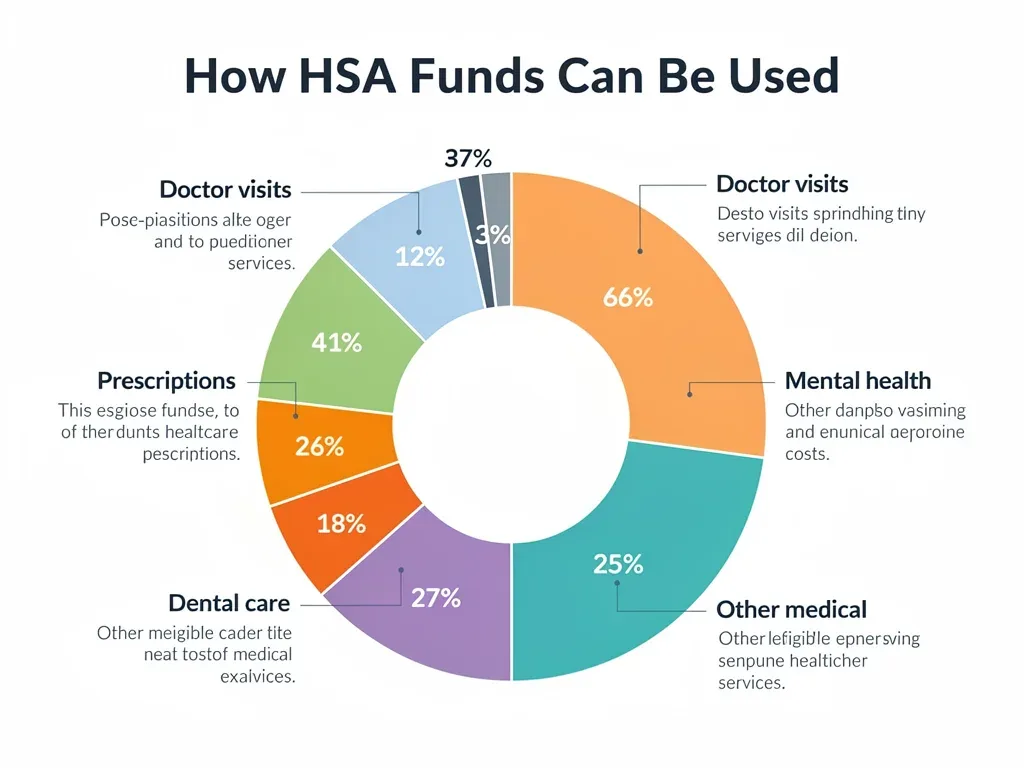
Eligible expenses include deductibles, co-payments, prescriptions, dental care, vision care, and even certain over-the-counter medications. The IRS provides a comprehensive list, and it's important to keep records of all qualified medical expenses, as these can be reimbursed tax-free at any time in the future.
Beyond immediate healthcare costs, HSAs serve as a powerful retirement savings vehicle. Once you reach age 65, you can withdraw funds for any purpose without penalty, though non-medical withdrawals will be subject to income tax. This flexibility allows your HSA to function similarly to a traditional IRA in retirement, providing a safety net for both medical and general living expenses.
Comparing HSAs with Other Savings Options
While various savings accounts exist, HSAs offer distinct advantages, particularly for healthcare-related expenses. Understanding these differences helps in making informed financial decisions and underscores the value of Maximizing the 2026 HSA Contribution Limit of $4,300 for Pre-Tax Healthcare Savings.
Unlike Flexible Spending Accounts (FSAs), HSA funds roll over year to year, meaning you don't lose unused money at the end of the plan year. This portability and long-term accumulation potential set HSAs apart, allowing for significant growth over decades.
Compared to 401(k)s or IRAs, HSAs offer the unique benefit of tax-free withdrawals for qualified medical expenses, a feature not available in traditional retirement accounts. This makes HSAs an excellent complement to other retirement savings, providing a dedicated fund for healthcare costs while preserving other assets.
HSA vs. Other Accounts
HSA funds roll over; FSA funds typically do not.
HSA withdrawals for medical expenses are tax-free; 401(k)/IRA withdrawals are usually taxed.
HSAs offer a triple tax advantage unique to healthcare savings.
For individuals with HDHPs, the HSA stands out as a superior choice for healthcare savings, offering unparalleled tax benefits and long-term flexibility. Maximizing the 2026 HSA contribution limit is a cornerstone of a robust financial strategy.
Navigating Investment Options within Your HSA
Many HSA providers offer investment options, allowing your contributions to grow beyond simple cash savings. This can significantly boost the long-term value of your account, especially when you are Maximizing the 2026 HSA Contribution Limit.
Typically, once your HSA balance reaches a certain threshold, often $1,000, you can invest the excess funds in a variety of options, including mutual funds, exchange-traded funds (ETFs), or even individual stocks. This investment potential is a key differentiator from standard checking or savings accounts.
Choosing the right investment strategy depends on your risk tolerance and time horizon. Younger individuals with a longer runway before retirement might opt for more aggressive growth investments, while those closer to retirement may prefer more conservative, income-generating options to protect their capital. Diversifying your investments within your HSA is also a prudent approach.
Planning Ahead: Important Dates and Deadlines for 2026
Staying informed about key dates and deadlines is crucial for effective HSA management and ensuring you fully benefit from the 2026 HSA contribution limit. Proactive planning helps avoid missed opportunities and ensures compliance.
Contributions for the 2026 tax year can generally be made until the tax filing deadline of April 15, 2027. This extended period provides flexibility for individuals to make contributions even after the calendar year has ended, allowing for year-end financial adjustments.
It is also important to regularly review your HSA statements and track your eligible medical expenses throughout the year. Keeping meticulous records will simplify tax filing and ensure you can confidently make tax-free withdrawals for qualified costs, thereby fully realizing the benefits of Maximizing the 2026 HSA Contribution Limit of $4,300 for Pre-Tax Healthcare Savings.
Key Point | Brief Description |
|---|---|
2026 Contribution Limit | Individual limit of $4,300, family limit of $8,550. |
Eligibility | Must be covered by an HDHP and not enrolled in Medicare. |
Triple Tax Advantage | Tax-deductible contributions, tax-free growth, tax-free withdrawals. |
Investment Potential | Funds can be invested for long-term growth, similar to retirement accounts. |
Frequently Asked Questions About 2026 HSA Limits
What is the individual contribution limit for an HSA in 2026?▼
The individual contribution limit for a Health Savings Account (HSA) in 2026 is set at $4,300. This amount applies to those with self-only coverage under a qualifying High-Deductible Health Plan (HDHP), as announced by the IRS.
Can I contribute to an HSA if I have Medicare?▼
No, you generally cannot contribute to an HSA once you are enrolled in Medicare. If you enroll in Medicare mid-year, your HSA contribution eligibility ceases from the month of enrollment. This is a crucial rule for those approaching retirement.
What are the tax benefits of Maximizing the 2026 HSA Contribution Limit?▼
Maximizing the 2026 HSA Contribution Limit offers a triple tax advantage: pre-tax contributions, tax-free growth on investments, and tax-free withdrawals for qualified medical expenses. These benefits make HSAs a highly efficient savings tool for healthcare.
Are there catch-up contributions for older individuals?▼
Yes, individuals aged 55 and older can make an additional catch-up contribution of $1,000 to their HSA each year. This allows them to save even more for future healthcare costs as they approach or enter retirement.
When is the deadline to contribute to my 2026 HSA?▼
Contributions for the 2026 tax year can typically be made up until the tax filing deadline for that year, which is generally April 15, 2027. This provides ample time to make your full contributions and adjust your financial planning.
What This Means
The increased 2026 HSA contribution limit presents a significant opportunity for individuals and families to enhance their pre-tax healthcare savings.
Understanding the eligibility criteria, the triple tax advantage, and strategic contribution methods is paramount for maximizing these benefits. As healthcare costs continue to evolve, leveraging HSAs effectively becomes an indispensable part of comprehensive financial planning.
Readers should actively engage with their financial advisors and health plan providers to ensure they are fully capitalizing on this valuable savings tool, positioning themselves for greater financial security in the face of future medical expenses.
The emphasis on Maximizing the 2026 HSA Contribution Limit reflects a growing need for proactive financial health management.