FAA Mandates 100% Cash Refunds for Airline Cancellations
Advertisements
The newly enforced regulations on FAA Cash Refunds finally put an end to those predatory airline practices by legally obligating carriers to return 100% of your funds directly to your original payment method.
This sweeping federal mandate effectively eliminates the legal loopholes air carriers previously relied on to issue unwanted travel vouchers, shifting the balance of power back toward everyday passengers.
Whether your itinerary gets scrapped entirely or suffers a major schedule overhaul, guaranteed direct repayments ensure that financial protection is no longer optional for major airlines.
Navigating flight disruptions can still be stressful, but understanding these fresh consumer protections empowers you to demand immediate restitution without endless customer service hassles. Here is a clear breakdown of how the new rules work, what qualifies as a disruption, and how to make sure you receive every dollar you are owed.
Understanding the New FAA Refund Mandate
The FAA Cash Refunds, a comprehensive measure aimed at bolstering passenger rights. This mandate clarifies the circumstances under which airlines are obligated to provide full cash refunds, eliminating previous ambiguities that often favored carriers.
The rule specifically targets significant flight changes and cancellations, ensuring that passengers are not left out of pocket due to circumstances beyond their control.
This includes instances where flights are canceled, departure or arrival times are significantly altered, or connections are missed due to airline-caused delays. The definition of 'significant' is now more precisely outlined.
Previously, airlines often had discretion in offering alternative compensation, such as travel credits, which could expire or be difficult to use. The new FAA cash refunds rule removes this discretion, making cash the default and mandatory compensation for qualifying disruptions.
Key Provisions of the New Regulation
The core of the new regulation centers on defining what constitutes a refund-eligible event and the timeline for processing these refunds. It aims to standardize practices across all airlines operating in the U.S., fostering a more equitable environment for consumers.
A critical aspect is the requirement for airlines to automatically issue refunds without passengers having to explicitly request them. This shifts the burden from the consumer to the airline, streamlining the refund process significantly. The FAA Cash Refunds with a focus on efficiency.
Automatic Refunds: Airlines must proactively issue refunds without a passenger request.
Cash as Default: Vouchers or credits are no longer acceptable substitutes for cash refunds.
Timely Processing: Refunds must be processed within a specified timeframe, typically seven business days for credit card purchases and 20 days for other payment methods.
Significant Changes Defined: Clearer guidelines on what constitutes a 'significant' change to a flight schedule, triggering refund eligibility.
These provisions collectively represent a robust framework designed to protect consumers from financial losses due to airline operational issues. The FAA's stance is unequivocal: passenger funds must be returned promptly and in full when services are not delivered as promised.
Impact on Airlines and Operational Adjustments
The FAA Cash Refunds, compelling airlines to undertake substantial operational and financial adjustments. This mandate will necessitate a reevaluation of current cancellation and refund policies, along with the technological infrastructure supporting them.
Airlines must now ensure their systems are capable of identifying eligible refund scenarios automatically and processing cash disbursements efficiently.
This could involve significant investments in IT upgrades and staff training to handle the increased volume and complexity of cash refunds. The financial implications are considerable, as airlines will no longer be able to retain funds from disrupted flights by issuing non-cash compensation.
Furthermore, this rule might influence how airlines manage their flight schedules and operational resilience. The potential financial penalties for cancellations could incentivize carriers to minimize disruptions, leading to more robust contingency planning and potentially fewer last-minute changes. The FAA Cash Refunds to encourage better service.
Challenges and Opportunities for Carriers
While the new regulation presents challenges, it also offers opportunities for airlines to rebuild consumer trust. Transparency and prompt compliance with the FAA cash refunds rule can enhance brand reputation and customer loyalty, crucial elements in a competitive market.
Airlines that embrace these changes and communicate clearly with passengers about their rights may gain a competitive edge. This moment provides an opportunity for carriers to demonstrate their commitment to customer service, moving beyond mere regulatory compliance to genuine passenger advocacy. The FAA Cash Refunds, pushing for a higher standard.
System Upgrades: Investment in technology for automated refund processing.
Policy Revisions: Adjusting existing terms and conditions to align with new FAA requirements.
Financial Planning: Allocating reserves to manage potential increases in cash payouts.
Customer Communication: Developing clear and proactive communication strategies regarding passenger rights.
The shift towards mandatory cash refunds also means airlines will need to be more strategic in their scheduling and resource allocation, aiming to reduce the incidence of disruptions that trigger these payouts. This could lead to a more reliable and predictable air travel experience for everyone.
Passenger Rights and Consumer Empowerment
The FAA Cash Refunds, significantly empowering air travelers with enhanced rights and greater financial security. This rule marks a substantial victory for consumer advocacy groups who have long campaigned for clearer, more enforceable protections against airline disruptions.
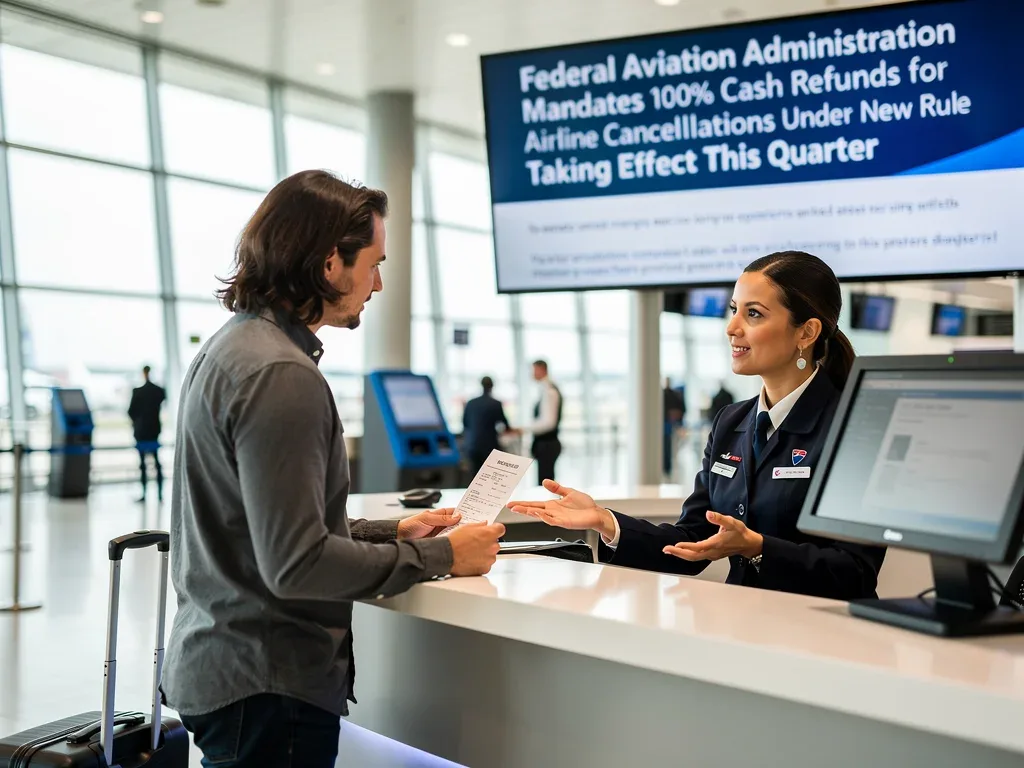
Passengers now have a definitive right to a full cash refund for qualifying cancellations or significant schedule changes, eliminating the ambiguity and frustration often associated with previous airline policies.
This clarity means travelers can plan with more confidence, knowing their funds are protected if their travel plans are unilaterally altered by an airline. The impact of the FAA cash refunds rule is immediate and tangible.
This newfound empowerment extends to the ease of obtaining refunds. With airlines now mandated to automatically issue cash refunds, passengers are spared the often-arduous process of navigating complex customer service channels or battling for their rightful compensation. The FAA Cash Refunds, making it easier for consumers.
What Travelers Need to Know
To fully benefit from these new protections, travelers should familiarize themselves with the specific conditions that trigger a cash refund. While the rule covers significant changes, understanding these definitions will help passengers assert their rights effectively.
It is important to keep accurate records of bookings, flight changes, and any communication with airlines. This documentation can prove invaluable if a dispute arises, although the intent of the new rule is to minimize such occurrences by making the process automatic. The FAA cash refunds rule provides a strong legal backing for passenger claims.
Retain Documentation: Keep copies of flight confirmations, cancellation notices, and any correspondence.
Understand 'Significant Change': Know what specific flight alterations qualify for a mandatory cash refund.
Monitor Refund Timelines: Be aware of the deadlines for airlines to process cash refunds (7 or 20 days).
Report Non-Compliance: Understand how to report airlines that fail to adhere to the new refund rules to the FAA.
This regulation is a testament to the power of collective advocacy and regulatory action in shaping a more consumer-friendly travel environment. Passengers are now better equipped than ever to navigate the complexities of air travel disruptions.
Timeline and Implementation Details
The FAA Cash Refunds, initiating a crucial period of transition for both the aviation industry and travelers. The effective date marks the point from which airlines are legally obligated to comply with all provisions of the new mandate.
While the rule officially takes effect this quarter, airlines have likely been preparing for its implementation following the initial announcement and public comment periods. This preparation includes updating internal policies, training staff, and reconfiguring IT systems to handle the new refund protocols. The seamless transition is a key objective for the FAA.
The FAA will also be actively monitoring airline compliance, with provisions for enforcement actions against carriers that fail to meet the new standards. This oversight ensures that the benefits of the FAA cash refunds rule are fully realized by the traveling public. The FAA Cash Refunds with robust enforcement in mind.
What to Expect in the Coming Months
As the rule rolls out, initial reports will likely focus on how effectively airlines are adapting to the new requirements. Travelers may experience a noticeable difference in how cancellations and significant delays are communicated and resolved, with a clear emphasis on cash compensation.
There may be a period of adjustment where some issues arise, but the FAA is expected to address these swiftly to ensure the integrity of the new consumer protections. Passengers should remain vigilant and informed about their rights during this initial implementation phase. The FAA cash refunds are a game-changer.
Initial Compliance Reviews: FAA will conduct checks to ensure airlines are adhering to the new rule.
Public Awareness Campaigns: Increased efforts to inform travelers about their new refund rights.
Potential for Early Challenges: Some airlines may face initial hurdles in full implementation, requiring swift corrective action.
Ongoing Monitoring: Continuous oversight by the FAA to ensure sustained compliance and effectiveness.
This phased implementation approach aims to integrate the new refund mandate smoothly into the existing operational framework of the aviation industry while maximizing its benefits for consumers. The FAA Cash Refunds, promising a new era for air travel.
Broader Implications for the Travel Industry
The FAA Cash Refunds, sending ripple effects throughout the broader travel industry. Beyond airlines, this rule could influence travel agencies, booking platforms, and even travel insurance providers, as consumer expectations for financial protection are elevated.
Travel agencies and online travel platforms will need to update their own policies and advisories to reflect these new refund rights, ensuring they accurately inform customers.
This could lead to a more standardized approach to cancellation policies across the entire travel ecosystem, benefiting consumers with clearer terms. The FAA cash refunds create a new benchmark.
Furthermore, the increased certainty of cash refunds might alter the demand for certain types of travel insurance. While insurance still offers protection for other unforeseen circumstances, the core risk of losing money due to an airline-caused cancellation is significantly mitigated by this new FAA mandate. The FAA Cash Refunds, shifting market dynamics.
Shifting Consumer Behavior and Market Trends
With greater assurance of cash refunds, consumers may feel more confident in booking flights further in advance or choosing airlines that demonstrate strong compliance with the new rules. This could lead to a more competitive environment where airlines vie for customer trust through their adherence to passenger rights.
The mandate also sets a precedent for future consumer protection efforts in the travel sector, potentially inspiring similar regulations in other areas. It underscores a growing global trend towards prioritizing traveler welfare and financial security. The FAA cash refunds rule is a significant step in this direction.
Travel Agency Updates: Agencies must align their policies and advice with the new FAA rule.
Insurance Market Adjustment: Potential changes in the offerings and demand for travel insurance products.
Increased Consumer Confidence: Travelers may be more willing to book flights, knowing their funds are protected.
Competitive Shift: Airlines with strong refund processes may gain a competitive advantage.
Ultimately, the FAA Cash Refunds, fostering a more transparent and accountable travel industry. This benefits not only the direct airline consumer but also sets a higher standard for all stakeholders involved in facilitating travel.
Historical Context and Advocacy Efforts
The FAA Cash Refunds, culminating years of persistent advocacy from consumer groups, lawmakers, and affected travelers. This new rule is not an overnight decision but rather the result of a sustained effort to address systemic issues within the airline industry.
For decades, passengers have voiced frustrations over inconsistent refund policies, particularly when airlines offered non-cash compensation for canceled flights. The COVID-19 pandemic significantly exacerbated these issues, as mass cancellations left millions of travelers with vouchers they couldn't use, highlighting the urgent need for regulatory intervention. The push for FAA cash refunds intensified during this period.
Various legislative proposals and public petitions contributed to building momentum for this change. Consumer watchdogs played a crucial role in documenting passenger grievances and lobbying for stronger federal oversight. The FAA Cash Refunds, reflecting this long-standing pressure.
Lessons Learned and Future Outlook
The journey to this new refund mandate offers valuable lessons in consumer protection and regulatory responsiveness. It demonstrates that sustained public and political pressure can indeed lead to meaningful policy changes, even in highly regulated industries like aviation.
Looking ahead, this rule sets a precedent for how future consumer issues in air travel might be addressed. It underscores the importance of clear, unambiguous regulations that leave little room for interpretation by service providers. The FAA cash refunds rule is a benchmark for future consumer advocacy.
Pandemic Impact: COVID-19 highlighted the critical need for robust refund policies.
Consumer Group Influence: Advocacy organizations were instrumental in pushing for these changes.
Legislative Support: Bipartisan efforts in Congress contributed to the rule's development.
Precedent for Future Regulations: This rule may inspire similar protections in other sectors.
The FAA Cash Refunds, marking a significant milestone in the ongoing effort to balance industry interests with passenger rights. This outcome reflects a growing recognition of the need for stronger protections for the traveling public.
Comparing US and International Refund Policies
The FAA Cash Refunds, bringing US passenger rights closer to, and in some aspects, surpassing international standards. This new rule offers an opportune moment to compare how the United States now stands alongside other regions regarding airline refund policies.
For years, many European Union countries, under EU261 regulations, have provided robust compensation and refund rights for passengers experiencing significant flight delays or cancellations.
These regulations often include both cash compensation and the right to a full refund. The new FAA cash refunds rule aligns the US more closely with these established protections.
While some international policies might offer additional compensation for delays, the FAA's mandate for 100% cash refunds for cancellations places the US firmly among the leaders in direct financial protection.
This move simplifies the landscape for international travelers flying to or from the US, offering a clearer, more predictable outcome in case of disruption. The FAA Cash Refunds, enhancing global consistency.
Harmonizing Global Travel Standards
This harmonization of refund policies is beneficial for both consumers and airlines operating across borders. For passengers, it means less confusion about their rights regardless of their origin or destination. For airlines, it encourages a more consistent approach to customer service globally, even if specific regulations vary.
The new US rule could also serve as an inspiration for other nations or international bodies to review and potentially strengthen their own passenger protection frameworks. It reinforces the idea that cash refunds should be the standard, not the exception, when service is not delivered. The FAA cash refunds rule sets a powerful example.
EU261 Comparison: US now offers similar or stronger cash refund rights for cancellations.
Global Consistency: Reduces confusion for international travelers flying to/from the US.
Potential for Influence: May encourage other countries to strengthen their own refund policies.
Direct Financial Protection: Focus on 100% cash refunds is a strong consumer safeguard.
By mandating 100% cash refunds, the FAA Cash Refunds, not only protecting its citizens but also contributing to a global upward trend in passenger rights and airline accountability.
Enforcement and Reporting Non-Compliance
The FAA Cash Refunds, backed by a commitment to robust enforcement and clear channels for reporting non-compliance. The effectiveness of this new rule hinges on airlines adhering to its provisions and passengers knowing how to seek recourse if they don't.
The FAA, along with the Department of Transportation (DOT), will oversee airline compliance through a combination of audits, investigations, and consumer complaint analysis. Airlines found to be in violation of the rule could face significant fines and penalties, ensuring a strong deterrent against non-adherence. This oversight is crucial for the success of the FAA cash refunds policy.
For passengers, understanding the process for reporting an airline that fails to provide a mandatory cash refund is essential. The DOT provides mechanisms for consumers to file complaints, which serve as critical data points for identifying systemic issues and initiating enforcement actions. The FAA Cash Refunds with accountability at its core.
Steps for Passengers to Take
If an airline fails to issue a 100% cash refund for a qualifying cancellation or significant schedule change, passengers should first attempt to resolve the issue directly with the airline. If that proves unsuccessful, filing a formal complaint with the DOT is the next crucial step.
Providing detailed information, including flight numbers, dates, evidence of cancellation, and communication with the airline, will strengthen the complaint. The DOT's consumer protection office is equipped to investigate these claims and ensure airlines meet their obligations under the new rule. The FAA cash refunds are a right, not a privilege.
Contact Airline First: Attempt to resolve the refund issue directly with the carrier.
Document Everything: Keep records of all interactions, flight details, and refund denials.
File a DOT Complaint: Use the Department of Transportation's official complaint portal.
Follow Up: Monitor the status of your complaint and respond to any requests for additional information.
By actively participating in the enforcement process, passengers play a vital role in ensuring that the FAA Cash Refunds, effectively protecting all air travelers.
Key Point | Brief Description |
|---|---|
New Mandate | FAA now requires 100% cash refunds for airline cancellations. |
Consumer Protection | Strengthens passenger rights, ensuring financial security for disrupted travel. |
Airline Impact | Requires operational adjustments, IT upgrades, and revised refund policies. |
Enforcement | FAA and DOT will monitor compliance, with penalties for non-adherence. |
Frequently Asked Questions About FAA Cash Refunds
What exactly does the new FAA rule mandate for refunds?▼
The Federal Aviation Administration Mandates 100% Cash Refunds for Airline Cancellations Under New Rule Taking Effect This Quarter. This means if your flight is significantly canceled or changed, airlines must provide a full cash refund, not just vouchers or credits, directly to the passenger.
When does this new FAA refund rule take effect?▼
This new regulation from the Federal Aviation Administration Mandates 100% Cash Refunds for Airline Cancellations Under New Rule Taking Effect This Quarter. Travelers should be aware of the specific date as it approaches to understand when these enhanced protections begin for their bookings.
What constitutes a 'significant change' qualifying for a cash refund?▼
The FAA defines a 'significant change' to include canceled flights, significant alterations to departure or arrival times, changes to the departure or arrival airport, or changes in the number of connections. These changes now trigger the mandatory 100% FAA cash refunds.
How quickly must airlines process these cash refunds?▼
Under the new rule, airlines are generally required to process cash refunds within seven business days for credit card purchases and 20 calendar days for other payment methods. This ensures timely reimbursement following a qualifying flight disruption under the FAA cash refunds mandate.
What if an airline refuses to provide a cash refund as mandated?▼
If an airline fails to comply with the Federal Aviation Administration Mandates 100% Cash Refunds for Airline Cancellations Under New Rule Taking Effect This Quarter, passengers should first contact the airline. If unresolved, file a complaint with the Department of Transportation (DOT) for investigation and potential enforcement action.
What happens now
The implementation of the FAA Cash Refunds represents a significant step forward for air traveler rights in the United States. This new era of consumer protection will undoubtedly reshape how airlines operate and how passengers perceive their travel investments.
As the rule takes full effect, both the industry and consumers will navigate its nuances, with the FAA and DOT closely monitoring compliance. Travelers are encouraged to stay informed and exercise their newly solidified rights, ensuring accountability across the aviation sector.