Bank of Canada Rate Hike: Mortgage Impact 2026 Explained
Advertisements
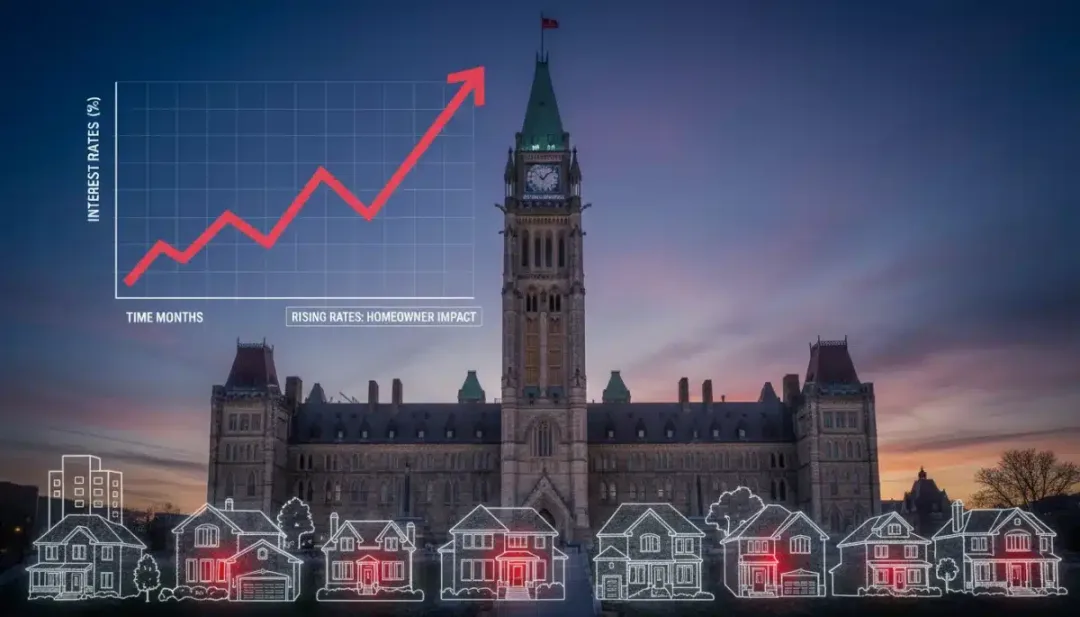
Navigating the shifting tides of Bank of Canada Mortgages 2026 has just become a lot more critical for homeowners across the country.
With the central bank shaking up the real estate landscape, your household budget and long-term financial plans might be facing an unexpected pivot.
An abrupt shift in monetary policy has sent a ripple effect through the domestic housing market, altering the outlook for variable-rate borrowers and those approaching loan renewals.
This sudden adjustment directly pressures borrowing costs, forcing many to completely rethink their current debt-management strategies.
This article cuts through the economic noise to deliver clear, verified analysis and immediate insights regarding your property financing. Discover exactly how these updated lending conditions alter your monthly payments and learn how to proactively shield your wallet.
Bank of Canada Hikes Rates: The Immediate Impact
The Bank of Canada announced a 0.5% increase in its key interest rate, a move anticipated by many but still carrying considerable weight for the Canadian economy. This decision marks a continued effort to bring inflation back to the central bank’s target range.
This rate hike immediately affects prime lending rates offered by commercial banks, which are directly tied to the Bank of Canada’s overnight rate. Consequently, variable-rate mortgage holders will likely see an upward adjustment in their monthly payments very soon.
The central bank’s communication emphasized its commitment to price stability, indicating that further adjustments might be considered based on incoming economic data. This proactive stance aims to cool down an overheated economy and curb inflationary expectations across the country.
Understanding Variable-Rate Mortgages Post-Hike
For Canadians with variable-rate mortgages, the recent 0.5% increase translates directly into higher interest costs. These mortgages typically adjust with the prime rate, meaning your monthly payments will increase proportionally.
It is crucial for variable-rate mortgage holders to review their latest statements and contact their lenders to understand the exact impact on their payments. Proactive budgeting and financial planning are essential steps to manage these increased costs effectively.
While some variable-rate mortgage products have fixed payments with adjusting amortization periods, the majority will see an immediate rise in their required monthly contributions.
This necessitates a careful assessment of household budgets to accommodate the new financial realities.
How Variable Rates Adjust
- Lenders typically adjust within days of a Bank of Canada announcement.
- Your interest portion of the payment increases, often leading to higher overall payments.
- Some mortgages may see extended amortization periods if payments remain fixed.
The frequency of these adjustments can vary, but the underlying principle remains: as the Bank of Canada’s policy rate rises, so too does the cost of borrowing for variable-rate products. This direct correlation makes these homeowners particularly vulnerable to rate fluctuations.
Fixed-Rate Mortgages and Future Renewals in 2026
While current fixed-rate mortgage holders are insulated from immediate changes, the Bank of Canada’s rate hike significantly influences their future.
Those with fixed terms expiring in 2026 will face a very different rate environment than when they initially secured their mortgages.
The bond market, which heavily influences fixed mortgage rates, often reacts to central bank decisions and future rate hike expectations. This means that even before 2026, the trajectory for fixed-rate renewals is already shifting upwards.
Homeowners whose fixed terms mature in 2026 should begin planning now. Understanding the potential for significantly higher renewal rates is critical for budgeting and exploring options like refinancing or adjusting amortization schedules to manage future payments.
Preparing for 2026 Mortgage Renewals
- Start researching current fixed rates and future projections.
- Consult with a mortgage broker to explore renewal options.
- Assess your financial capacity for higher payments in 2026.
The landscape for Bank of Canada Mortgages 2026 will likely be characterized by higher borrowing costs. This calls for strategic foresight and proactive engagement with financial advisors to mitigate potential payment shocks and secure the best possible terms.
Inflationary Pressures Driving Central Bank Action
The primary driver behind the Bank of Canada’s decision is the persistently high inflation rate, which has far exceeded the central bank’s 2% target. Consumer prices have continued to climb, impacting the purchasing power of Canadians nationwide.
The Bank of Canada aims to cool demand in the economy by making borrowing more expensive, thereby reducing spending and ultimately bringing inflation under control.
This strategy, while necessary, has direct consequences for sectors like real estate and consumer credit.
Officials have reiterated that their commitment to restoring price stability is unwavering, suggesting that further rate increases remain on the table if inflation does not show clear signs of moderating.
This creates an environment of cautious optimism and strategic financial planning for households.

The Broader Economic Landscape and Mortgage Implications
The Bank of Canada’s rate hike is not an isolated event but rather part of a broader economic strategy impacting various sectors. This includes consumer spending, investment, and the overall housing market.
Higher borrowing costs can dampen housing demand, potentially leading to a moderation in home prices, especially in previously overheated markets. For prospective buyers, this could mean less competition but also more expensive financing.
The ripple effect extends to other forms of credit, such as lines of credit and personal loans, which will also become more expensive. Canadians should assess their entire debt portfolio in light of these rising interest rates, especially concerning Bank of Canada Mortgages 2026.
Economic Considerations for Homeowners
- Higher interest rates can reduce discretionary income.
- Property values may stabilize or decline in some regions.
- Overall debt servicing costs will increase across various credit products.
Understanding these interconnected economic factors is critical for Canadians to make informed financial decisions. The current environment demands a comprehensive review of personal finances to ensure resilience against ongoing economic shifts.
Strategies for Canadian Homeowners and Borrowers
In response to the Bank of Canada’s rate hike, Canadian homeowners and borrowers must adopt proactive strategies to mitigate the impact. This includes re-evaluating budgets, exploring refinancing options, and seeking professional financial advice.
For those with variable-rate mortgages, considering a switch to a fixed rate might be an option, depending on market conditions and personal risk tolerance. However, fixed rates are also rising, so timing and careful analysis are essential.
Homeowners approaching renewal in 2026 should engage with their lenders or mortgage brokers well in advance. Understanding the best available rates and terms, and negotiating effectively, can save thousands over the life of the mortgage.
Key Financial Strategies
- Review and adjust your household budget to accommodate higher payments.
- Consider making lump-sum payments to reduce your principal faster.
- Explore refinancing options or extending your amortization period if needed.
These strategies are not one-size-fits-all; individualized financial planning is crucial. The goal is to ensure that your mortgage remains manageable and that your overall financial health is protected against future rate movements, especially concerning Bank of Canada Mortgages 2026.
Government and Industry Responses to Rate Hikes
The Bank of Canada’s rate hike has also prompted responses from both government bodies and the financial industry. These responses often aim to support homeowners and maintain stability in the housing market.
Government programs and initiatives might be introduced or adjusted to provide relief or guidance for Canadians struggling with increased mortgage costs. It is important to stay informed about any such announcements from federal or provincial authorities.
Lenders are also adapting their offerings, potentially introducing new mortgage products or flexibility options for borrowers. Homeowners should actively engage with their banks to inquire about available support or alternative solutions.

Expert Projections for Bank of Canada Mortgages 2026
Financial analysts and economists are offering various projections regarding the trajectory of interest rates and their long-term impact on Bank of Canada Mortgages 2026.
While predictions vary, a consensus points towards a sustained period of higher rates compared to the ultra-low rates of recent years.
Many experts believe the Bank of Canada will continue to prioritize inflation control, meaning additional rate hikes could occur if economic data warrants it. This outlook suggests that borrowers should not expect a rapid return to significantly lower rates in the near future.
The prolonged impact on mortgage affordability and the housing market is a key area of focus for these projections. Understanding these expert views can help homeowners prepare for the financial environment of 2026 and beyond.
Analyst Forecasts for 2026
- Continued vigilance from the Bank of Canada on inflation.
- Potential for further gradual rate increases if inflation persists.
- Mortgage rates likely to remain elevated compared to pre-hike levels.
These projections underscore the importance of long-term financial planning and resilience. Homeowners need to factor in a potentially higher interest rate environment when making decisions about housing, savings, and debt management, particularly for Bank of Canada Mortgages 2026.
| Key Point | Brief Description |
|---|---|
| Rate Hike Impact | 0.5% increase directly raises variable mortgage payments. |
| Mortgage Renewals 2026 | Fixed-rate renewals in 2026 face significantly higher rates. |
| Inflationary Driver | Bank of Canada prioritizes controlling persistent high inflation. |
| Homeowner Strategy | Budget review, refinancing, and early planning are crucial. |
Frequently Asked Questions About Mortgages and Rate Hikes
How does the 0.5% rate hike immediately affect my variable mortgage?▼The 0.5% increase by the Bank of Canada typically leads to an immediate rise in your variable mortgage interest rate. This means your monthly payments will increase, directly impacting your household budget. It’s advisable to check with your lender for specific adjustments.
What should I do if my fixed mortgage renews in 2026?▼If your fixed mortgage renews in 2026, start planning now. Research current rates, consult a mortgage broker, and assess your future payment capacity. Higher rates are likely, so early preparation for Bank of Canada Mortgages 2026 is key to securing favourable terms.
Why is the Bank of Canada raising interest rates?▼The Bank of Canada is raising interest rates primarily to combat high inflation. By increasing borrowing costs, the central bank aims to cool down economic demand, reduce consumer spending, and ultimately bring the inflation rate back to its target of 2%.
Will this rate hike affect housing prices in Canada?▼Higher interest rates generally lead to reduced housing demand and can contribute to a moderation or even decline in home prices. While the impact varies by region, it makes borrowing more expensive, which can cool an overheated real estate market.
What financial strategies can help me manage higher mortgage payments?▼To manage higher mortgage payments, consider reviewing your budget, making lump-sum payments if possible, or exploring options like extending your amortization period. Seeking advice from a financial advisor can provide personalized strategies for your specific situation.
Looking Ahead: Navigating Bank of Canada Mortgages 2026
The Bank of Canada’s recent rate hike by 0.5% marks a significant development in the financial landscape, particularly for Bank of Canada Mortgages 2026.
This decision underscores the central bank’s firm commitment to taming inflation, a goal that will continue to shape monetary policy in the coming months and years.
For Canadian homeowners, the implications are clear: a period of higher borrowing costs is upon us, and proactive financial planning is no longer optional but essential.
Variable-rate mortgage holders will feel the immediate pinch, while those with fixed rates must strategically prepare for renewals in 2026 and beyond.
The broader economic environment, influenced by global factors and domestic policy, will continue to evolve.
Staying informed, consulting with financial experts, and adapting personal financial strategies will be critical for navigating the complexities of Bank of Canada Mortgages 2026 and ensuring long-term financial stability.