Maximize Your Backdoor Roth IRA in 2026: New $7,500 Limit
Advertisements
If high income limits are blocking your direct access to a Roth IRA in 2026, there is a completely legal, tax-advantaged strategy you should be leveraging right now. With the IRS officially raising the annual cap to $7,500, high-earning investors have a expanded opportunity to build tax-free wealth for retirement.
Executing this multi-step conversion process requires careful attention to avoid unexpected tax pitfalls, particularly regarding aggregation rules. Proper timing and accurate reporting on your tax forms can make the difference between seamless long-term gains and an unintended tax bill.
Whether you are looking to maximize your post-tax savings or shield future growth from federal taxes, navigating this indirect funding strategy is a crucial move for your financial plan. Here is what changed, how to avoid common tax traps, and the step-by-step roadmap to make the most of your contributions.
Understanding the Backdoor Roth IRA Strategy for 2026
The Backdoor Roth IRA strategy remains a critical tool for high-income earners looking to contribute to a Roth IRA, even when direct contributions are restricted. This involves making non-deductible contributions to a traditional IRA and then converting them to a Roth IRA.
For 2026, understanding the mechanics of this strategy becomes even more crucial with anticipated changes and continued scrutiny from the IRS. Navigating these rules successfully requires careful planning and adherence to specific guidelines.
The primary benefit of a Roth IRA, tax-free growth and withdrawals in retirement, makes the backdoor strategy highly appealing. Investors must stay informed about contribution limits and potential rule modifications to effectively utilize this avenue.
The New $7,500 Contribution Limit: What It Means
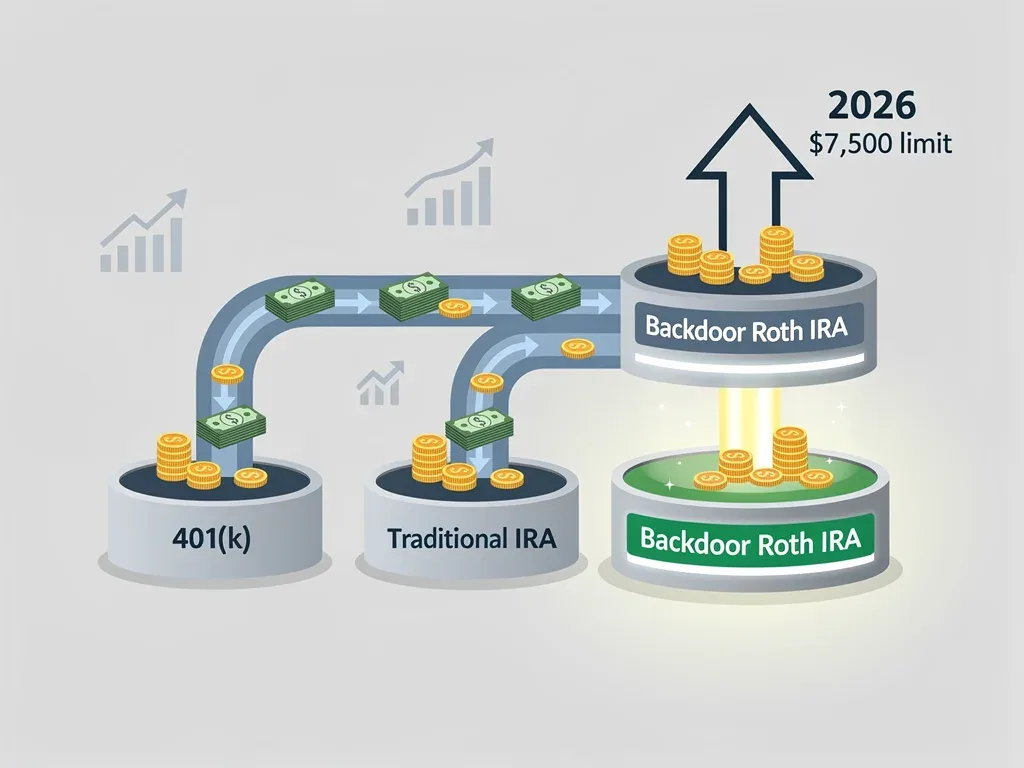
The projected increase in the IRA contribution limit to $7,500 for 2026 marks a significant development for retirement savers. This higher limit directly impacts the amount individuals can move into a Roth IRA via the backdoor method.
This adjustment allows for greater tax-free savings, offering a more robust retirement nest egg for those who qualify. It reflects ongoing inflation adjustments and the government's aim to support long-term financial security.
For individuals planning to Maximize Your Backdoor Roth IRA in 2026, this increased limit presents a clear opportunity. It underscores the importance of staying current with IRS announcements and financial planning strategies.
Increased Savings Potential
The new $7,500 limit means that individuals can potentially convert an additional $500 compared to previous years, assuming no other changes. This incremental increase, while seemingly small, compounds significantly over decades of investing.
This higher ceiling allows for more aggressive tax-advantaged savings, which can be particularly beneficial for younger investors. The power of compounding on this larger sum within a tax-free Roth account is substantial over a long investment horizon.
Higher annual contribution allowance.
Greater potential for tax-free growth.
Enhanced retirement savings capacity.
Impact on High-Income Earners
For high-income earners, who are typically phased out of direct Roth IRA contributions, the backdoor Roth strategy becomes even more vital. The increased limit directly benefits this group by expanding their tax-free investment options.
This group often seeks every available advantage to optimize their tax situation and retirement planning. The new limit provides a clear path to Maximize Your Backdoor Roth IRA in 2026.
Navigating IRS Pro-Rata Rules: A Critical Component
Understanding and correctly applying the IRS pro-rata rules is paramount for anyone utilizing the backdoor Roth IRA strategy. These rules dictate how the taxable portion of a Roth conversion is calculated, especially if you hold pre-tax IRA assets.
Failure to properly account for pro-rata rules can lead to unexpected tax liabilities, significantly eroding the benefits of the backdoor Roth. This complexity often requires careful consideration and, at times, professional guidance.
The pro-rata rule essentially states that if you have any pre-tax money in any traditional, SEP, or SIMPLE IRAs, a portion of your Roth conversion will be taxable. This is a key aspect to successfully Maximize Your Backdoor Roth IRA in 2026.

The Aggregate IRA Rule Explained
The pro-rata rule is applied across all your traditional, SEP, and SIMPLE IRA accounts, not just the one from which you convert. The IRS views all these accounts as a single aggregated IRA for this calculation.
This aggregate rule is what often catches individuals off guard, as they might only consider the specific IRA they are converting from. It's crucial to sum up all pre-tax balances across all your IRAs when calculating the taxable portion.
All traditional, SEP, and SIMPLE IRAs are combined.
Pre-tax balances across all IRAs are considered.
Impacts the taxable portion of Roth conversions.
Strategies to Avoid Pro-Rata Pitfalls
One common strategy to avoid the pro-rata rule is to consolidate all pre-tax IRA balances into a 401(k) or similar employer-sponsored plan before performing the Roth conversion. This leaves only non-deductible IRA contributions, making the conversion tax-free.
Another approach is to ensure that all traditional IRA contributions are non-deductible and that no pre-tax money exists in any IRA. This 'clean' IRA allows for a completely tax-free backdoor Roth conversion.
Careful planning is essential; consulting with a financial advisor can help navigate these complexities and ensure compliance. This proactive approach is vital to Maximize Your Backdoor Roth IRA in 2026 without incurring unexpected tax burdens.
Step-by-Step Guide to a Backdoor Roth Conversion
Executing a backdoor Roth conversion involves a few distinct steps that must be followed precisely to ensure compliance with IRS regulations. The process begins with making a non-deductible contribution to a traditional IRA.
Subsequently, this non-deductible contribution is converted from the traditional IRA to a Roth IRA. The timing of these steps can be important, though generally, a quick conversion minimizes market fluctuation risks.
Accurate reporting on IRS Form 8606 is the final, critical step. This form tracks your non-deductible IRA contributions and Roth conversions, ensuring the IRS correctly understands the tax-free nature of your conversion.
Making Non-Deductible Contributions
The first step is to contribute to a traditional IRA, ensuring that these contributions are designated as non-deductible. This means you do not claim a tax deduction for the contribution on your income tax return.
It is important to verify that your income exceeds the IRS limits for deductible traditional IRA contributions, making the non-deductible route the only option for many high-income individuals. This sets the stage to Maximize Your Backdoor Roth IRA in 2026.
Converting to a Roth IRA
Once the non-deductible contribution is made, the next step is to convert that amount to a Roth IRA. This conversion can typically be done immediately after the contribution settles in the traditional IRA account.
The key here is to convert the specific non-deductible funds. If there are other pre-tax funds in any of your IRAs, the pro-rata rule will apply, potentially making a portion of the conversion taxable.
Executing the conversion swiftly minimizes any potential gains that could accrue in the traditional IRA between contribution and conversion, which would then be taxable upon conversion.
Reporting Your Backdoor Roth on Form 8606
Properly reporting your backdoor Roth IRA conversion on IRS Form 8606 is crucial for avoiding tax complications. This form is used to track non-deductible IRA contributions and conversions, ensuring the IRS understands the tax-free portion of your Roth conversion.
Mistakes in completing Form 8606 can lead to your conversion being incorrectly identified as taxable, or even trigger penalties. It's a detailed form that requires accurate reporting of all IRA activity for the tax year.
Even if no taxes are due on the conversion, Form 8606 must be filed. This is a non-negotiable part of the process to Maximize Your Backdoor Roth IRA in 2026 effectively and compliantly.
Key Sections of Form 8606
Form 8606 has several parts, each serving a specific purpose. Part I is typically used to report non-deductible contributions to traditional IRAs, establishing your basis in these accounts.
Part II is where Roth conversions are reported. Here, you will detail the amount converted and calculate the taxable portion, taking into account any pre-tax IRA balances and the pro-rata rule.
Part I: Non-deductible IRA contributions.
Part II: Roth conversions and taxable amounts.
Accurate basis tracking is essential.
Common Reporting Errors to Avoid
One frequent error is failing to file Form 8606 entirely, which can lead the IRS to assume all IRA contributions were pre-tax. Another common mistake is miscalculating the basis or the pro-rata allocation.
It's also important to ensure that your financial institution reports the conversion correctly to the IRS via Form 1099-R. Reconciling your records with theirs is a good practice to prevent discrepancies.
Double-checking all figures and seeking professional tax advice can help mitigate these risks. This diligence is fundamental to Maximize Your Backdoor Roth IRA in 2026 without future headaches.
Future Outlook and Potential Legislative Changes
The landscape of retirement planning, especially for strategies like the backdoor Roth IRA, is always subject to potential legislative changes. While the strategy remains viable for 2026, continuous monitoring of congressional activity is advisable.
Past proposals have aimed to eliminate the backdoor Roth entirely, citing concerns about tax fairness and revenue generation. Though these attempts have not yet succeeded, the possibility of future legislative action persists.
Staying informed about these political developments is part of a comprehensive financial strategy. This proactive awareness allows investors to adapt quickly and continue to Maximize Your Backdoor Roth IRA in 2026 under evolving regulations.
The 'Build Back Better' Framework and Its Implications
The 'Build Back Better' framework, though not enacted in its original form, included provisions that would have significantly curtailed or eliminated backdoor Roth conversions. These discussions highlight the ongoing debate surrounding tax-advantaged retirement accounts.
Such proposals often target high-income individuals, aiming to limit their access to certain tax benefits. While these specific provisions did not pass, similar ideas could resurface in future legislative sessions.
The existence of such proposals underscores the dynamic nature of tax law and the need for investors to remain vigilant. The ability to Maximize Your Backdoor Roth IRA in 2026 depends on the current legal framework.
Why the Backdoor Roth Persists
Despite legislative challenges, the backdoor Roth IRA strategy has endured due to various factors, including its broad support among financial institutions and some policymakers. Its complexity also means it is not a widely used loophole by the general public.
The strategy aligns with the goal of encouraging retirement savings, even for those above income thresholds for direct Roth contributions. Its continued existence provides a valuable tool for many Americans.
For now, the strategy remains a legitimate and effective way to contribute to a Roth IRA, allowing individuals to Maximize Your Backdoor Roth IRA in 2026. However, this could change at any time, emphasizing the need for ongoing monitoring.
Maximizing Your Backdoor Roth IRA in 2026
To truly Maximize Your Backdoor Roth IRA in 2026, a holistic approach to financial planning is essential. This involves not only understanding the mechanics but also integrating it into your broader retirement strategy.
Consider your overall asset allocation, other retirement accounts, and future income projections when deciding on the optimal amount for your backdoor Roth conversion. A well-rounded plan ensures this strategy complements your other financial goals.
The increased contribution limit provides a greater opportunity, but it must be utilized within a disciplined and informed framework. This proactive management will yield the best long-term results.
Integrating with Other Retirement Accounts
The backdoor Roth IRA should be considered alongside other retirement vehicles like 401(k)s, 403(b)s, and traditional IRAs. Each account has unique benefits and limitations that should be leveraged strategically.
For instance, if you have a 401(k) that allows for after-tax contributions, a 'mega backdoor Roth' could be another powerful strategy to consider. This involves contributing after-tax money to your 401(k) and then converting it to a Roth account.
Understanding how these various accounts interact and can be combined is key to maximizing your overall tax-advantaged savings. This integrated approach helps Maximize Your Backdoor Roth IRA in 2026 full potential.
Regular Review and Adjustment
Financial planning is not a one-time event; it requires continuous review and adjustment. Tax laws change, personal circumstances evolve, and market conditions fluctuate, all of which can impact your retirement strategy.
Schedule regular check-ins with your financial advisor to assess your current plan and make any necessary modifications. This ensures your backdoor Roth strategy remains aligned with your objectives and compliant with the latest regulations.
Staying agile and responsive to changes is paramount for long-term financial success. This ongoing vigilance helps Maximize Your Backdoor Roth IRA in 2026 year after year.
Expert Insights and Recommendations
Financial experts consistently emphasize the importance of meticulous planning and professional consultation when dealing with complex strategies like the backdoor Roth IRA. Their insights can provide invaluable guidance for navigating the nuances of IRS rules.
Many advisors recommend initiating the non-deductible contribution and subsequent conversion early in the tax year. This proactive approach helps mitigate potential issues and provides ample time to address any unexpected complications.
Seeking advice from a qualified financial planner or tax professional is not merely a suggestion but a critical step for anyone looking to Maximize Your Backdoor Roth IRA in 2026 with confidence.
The Role of Financial Advisors
A financial advisor can help you assess your individual financial situation, determine if the backdoor Roth strategy is appropriate for you, and guide you through each step of the process. They can also help you understand the implications of the pro-rata rule and devise strategies to minimize its impact.
Advisors stay abreast of legislative changes and can provide timely updates and adjustments to your plan. Their expertise is particularly valuable in complex scenarios involving multiple retirement accounts or significant pre-tax IRA balances.
Engaging an expert ensures that your strategy is optimized for your specific needs and helps prevent costly errors. This professional guidance is key to successfully Maximize Your Backdoor Roth IRA in 2026.
Staying Informed on IRS Guidance
The IRS periodically releases new guidance, clarifications, or rulings that can affect retirement planning strategies. Subscribing to IRS updates or following reputable financial news sources is essential to stay informed.
Changes in IRS forms or instructions, even minor ones, can have significant implications for how you report your contributions and conversions. Being aware of these updates helps maintain compliance.
Proactive monitoring of official IRS communications is a core responsibility for anyone engaging in advanced tax strategies. This continuous learning is vital to Maximize Your Backdoor Roth IRA in 2026 effectively.
Key Point | Brief Description |
|---|---|
2026 Contribution Limit | Projected increase to $7,500 for IRA contributions, impacting backdoor Roth capacity. |
IRS Pro-Rata Rules | Mandatory understanding to avoid unexpected taxes on Roth conversions if pre-tax IRA funds exist. |
Form 8606 Reporting | Essential for accurately tracking non-deductible contributions and Roth conversions with the IRS. |
Legislative Monitoring | Stay updated on potential changes to tax laws that could affect the future of backdoor Roth IRAs. |
Frequently Asked Questions About Backdoor Roth IRAs
What is a Backdoor Roth IRA and why is it used?▼
A Backdoor Roth IRA allows high-income earners to contribute to a Roth IRA when direct contributions are restricted due to income limitations. It involves making a non-deductible contribution to a traditional IRA and then converting it to a Roth IRA, enabling tax-free growth and withdrawals in retirement.
How does the new $7,500 limit affect my Backdoor Roth in 2026?▼
The projected $7,500 IRA contribution limit for 2026 means you can potentially convert a larger amount into your Roth IRA via the backdoor method. This increases your capacity for tax-free retirement savings, offering a greater opportunity to Maximize Your Backdoor Roth IRA in 2026: Navigating the New $7,500 Contribution Limit and IRS Pro-Rata Rules.
What are the IRS pro-rata rules and how can I avoid them?▼
Pro-rata rules determine the taxable portion of a Roth conversion if you hold pre-tax money in any traditional, SEP, or SIMPLE IRAs. To avoid them, you can consolidate pre-tax IRA funds into a 401(k) or ensure all IRA contributions are non-deductible, leaving no pre-tax balances.
Is the Backdoor Roth IRA strategy still legal and safe?▼
Yes, the Backdoor Roth IRA strategy remains legal and a legitimate method for contributing to a Roth IRA for those above income limits. While legislative proposals to eliminate it have surfaced, none have passed into law, making it a viable strategy for 2026 and beyond, for now.
Why is Form 8606 so important for this strategy?▼
Form 8606 is crucial for accurately reporting non-deductible IRA contributions and Roth conversions to the IRS. Proper filing ensures the IRS correctly identifies the tax-free portion of your conversion, preventing potential taxation or penalties on funds that should be tax-exempt.
Looking Ahead: Strategic Financial Planning for 2026
The evolving landscape of retirement savings, highlighted by the anticipated changes to contribution limits and ongoing IRS regulations, underscores the critical need for proactive financial planning.
For those aiming to Maximize Your Backdoor Roth IRA in 2026, staying informed and working with financial professionals will be key. As legislative discussions continue, adaptability in strategy will ensure sustained benefits from tax-advantaged accounts, safeguarding your financial future.