Urgent alert: Bank of Canada rate decision and your mortgage by Q3 2026

Latest developments on Bank of Canada mortgage rates forecast 2026, with key facts, verified sources and what readers need to monitor next in Canada, presented clearly.
An Bank of Canada mortgage rates forecast 2026 is shaping today’s financial agenda, with new details released by officials and industry experts.
This update prioritizes what changed, why it matters, and what to watch next, offering a straightforward analysis for Canadian homeowners.
Understanding the implications of the Bank of Canada’s financial policies is crucial for anyone with a mortgage, as these decisions directly influence borrowing costs.
This report aims to provide a clear, objective overview of the recent announcement and its projected impact.
The information presented herein is based on official statements and expert analysis, ensuring accuracy and relevance for your financial planning.
We delve into the specifics to help you navigate the evolving mortgage landscape in Canada.
Bank of Canada’s latest rate decision: The immediate landscape
The Bank of Canada recently announced its latest interest rate decision, a move closely watched by homeowners and financial markets across the country.
This decision carries significant weight, directly influencing variable mortgage rates and indirectly affecting fixed-rate alternatives.
Understanding the rationale behind this decision requires an examination of current economic indicators, including inflation rates, employment data, and global economic stability.
These factors collectively inform the Bank’s strategy to maintain price stability and support sustainable economic growth.
For Canadian mortgage holders, this translates into immediate adjustments for those with variable rates and strategic planning considerations for those approaching renewal.
The ripple effect extends beyond monthly payments, impacting housing market dynamics and consumer spending.
Analyzing the Bank’s stance and economic outlook
The Bank of Canada’s official statement highlighted persistent inflationary pressures and a resilient labour market as key drivers for its decision.
Governor Tiff Macklem emphasized the commitment to bringing inflation back to the 2% target, indicating a cautious yet determined approach.
Economic forecasts accompanying the announcement pointed to a gradual moderation in inflation over the coming quarters, but acknowledged the ongoing risks from geopolitical tensions and supply chain disruptions.
This outlook underpins the Bank’s forward guidance on future rate adjustments.
- Inflation remains elevated, necessitating continued vigilance from the central bank.
- The Canadian labour market shows unexpected strength, potentially contributing to wage pressures.
- Global economic uncertainties continue to influence the Bank’s monetary policy decisions.
The Bank’s communication strategy is designed to provide clarity and predictability, though market reactions often reflect a complex interplay of expectations and interpretations.
This transparency is vital for financial institutions and consumers alike in planning for the future.
Understanding variable mortgages: Direct impact ahead
For homeowners with variable-rate mortgages, the Bank of Canada’s latest interest rate decision translates into direct and immediate changes to their monthly payments.
These mortgages are typically tied to the Bank’s prime rate, which adjusts in lockstep with the policy rate.
A rate hike means higher interest accrual, leading to increased payment amounts or a longer amortization period if payments remain fixed.
Conversely, a rate cut would offer relief, reducing borrowing costs and freeing up household funds.
It is imperative for variable mortgage holders to review their current terms and understand how their payments will be affected.
Proactive communication with lenders can help clarify these adjustments and explore potential options if financial strain becomes a concern.
Strategies for variable mortgage holders
In anticipation of further shifts in the Bank of Canada’s policy rate, variable mortgage holders have several strategies to consider.
One common approach is to make lump-sum payments to reduce the principal balance, thereby lowering the overall interest paid.
Another option is to increase regular payments beyond the minimum required, building equity faster and creating a buffer against future rate increases.
Some might also consider converting to a fixed-rate mortgage, although this involves locking in at prevailing rates which might be higher than current variable rates.
- Consider making additional principal payments to mitigate rising interest costs.
- Evaluate the benefits of increasing regular payments to shorten amortization.
- Explore converting to a fixed-rate mortgage for payment stability, weighing current fixed rates against future variable rate projections.
The decision to adjust a variable mortgage strategy should be based on individual financial circumstances, risk tolerance, and projected future rate movements.
Consulting with a financial advisor is highly recommended to assess the best course of action.
Fixed-rate mortgages: What to expect by Q3 2026
While fixed-rate mortgages are not immediately affected by the Bank of Canada’s rate decisions, their pricing is influenced by bond yields, which often move in anticipation of or reaction to central bank policy.
For those with fixed-rate mortgages nearing renewal by Q3 2026, the current environment is critical.
The prevailing interest rate landscape, shaped by the Bank of Canada’s actions, will dictate the rates available for renewal.
Homeowners renewing in Q3 2026 could face significantly different terms than their original agreements, potentially leading to higher monthly payments.
Preparation is key for these homeowners. It involves understanding future rate projections, assessing current home equity, and exploring various lender offers well in advance of the renewal date.
The goal is to secure the most favourable terms possible in a potentially higher rate environment.

Planning for fixed-rate mortgage renewals
As Q3 2026 approaches, fixed-rate mortgage holders should begin actively monitoring market trends and interest rate forecasts.
This proactive approach allows for ample time to compare offers from different lenders and negotiate the best possible terms.
It is also an opportune time to reassess personal financial goals and consider whether the existing mortgage structure still aligns with those objectives.
Options like extending amortization or making lump-sum payments before renewal can impact future payment obligations.
- Start researching renewal options and current fixed rates at least 6-12 months before Q3 2026.
- Review your credit score and financial health to ensure eligibility for competitive rates.
- Consider whether a blend of fixed and variable rates might be a suitable strategy for future stability and flexibility.
Engaging with a mortgage broker can provide valuable insights into the market and help identify competitive products tailored to individual needs.
The objective is to mitigate the impact of potential rate increases on future mortgage payments.
The housing market’s response to rate changes
The Bank of Canada’s interest rate decisions have a profound impact on the broader Canadian housing market.
Higher interest rates typically cool down an overheated market by reducing buyer affordability and increasing the cost of borrowing.
This can lead to a moderation in home prices and a decrease in sales activity, creating a more balanced market environment.
Conversely, lower rates tend to stimulate demand, potentially driving up prices and increasing competition among buyers.
The trajectory of the housing market up to Q3 2026 will largely depend on the Bank’s sustained monetary policy and its effectiveness in controlling inflation.
Market analysts are closely watching these dynamics for signs of stability or further adjustments.
Regional variations and market outlook by Q3 2026
While national trends provide a general overview, the impact of interest rate decisions can vary significantly across different Canadian regions.
Local economic conditions, supply and demand imbalances, and population growth all play a role in how specific markets respond.
Major urban centers might experience a more pronounced cooling effect due to higher existing home prices and mortgage balances, while more affordable regions could see continued demand.
This regional disparity is a crucial factor for both buyers and sellers to consider.
By Q3 2026, it is anticipated that the housing market will have adjusted to the new interest rate environment, potentially settling into a more sustainable growth pattern.
However, unforeseen economic shocks or policy shifts could alter this outlook.
Inflationary pressures and future rate projections
The Bank of Canada’s primary mandate is to keep inflation within its target range, and its interest rate decisions are a key tool in achieving this.
Persistent inflationary pressures from various sources, both domestic and international, continue to influence the Bank’s outlook.
Global supply chain issues, geopolitical conflicts, and strong consumer demand have all contributed to higher-than-desired inflation rates.
The Bank assesses these factors carefully to determine the appropriate pace and magnitude of rate adjustments.
Future rate projections are inherently uncertain, but current consensus suggests a period of elevated rates until inflation is firmly brought under control.
This implies that homeowners should prepare for a sustained period of higher borrowing costs.
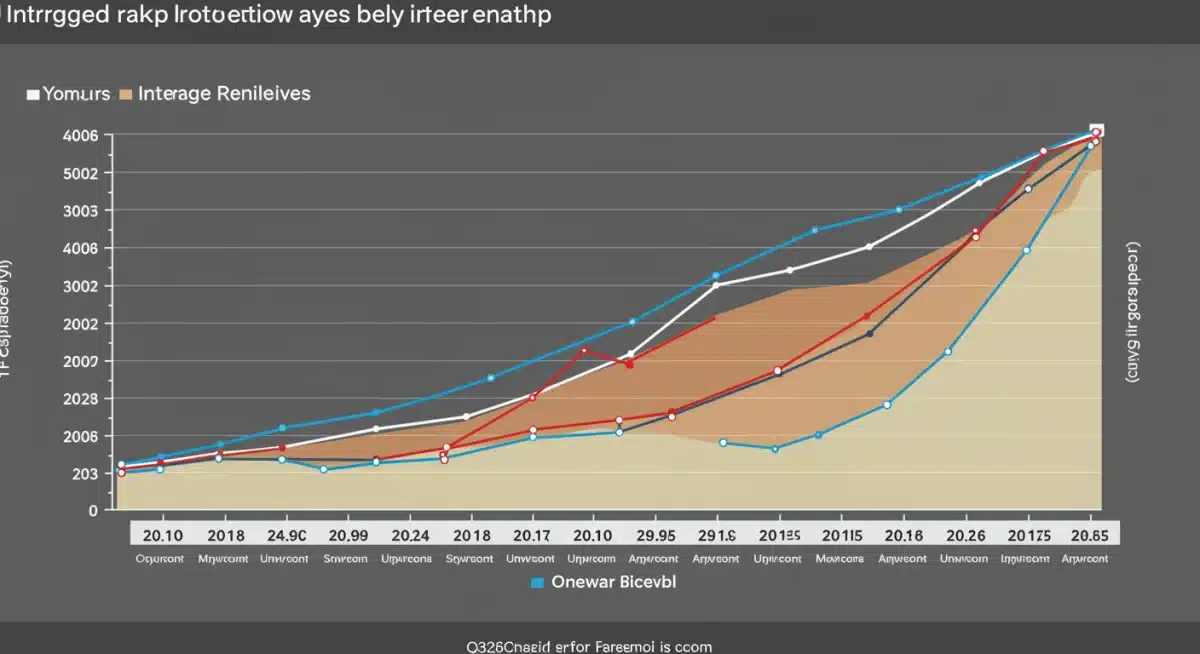
Expert forecasts for the Bank of Canada policy rate
Leading economists and financial institutions regularly publish forecasts for the Bank of Canada’s policy rate, offering valuable insights for mortgage planning.
While these are predictions, they provide a framework for understanding potential future scenarios.
Many experts anticipate that the Bank will remain data-dependent, adjusting rates based on incoming economic data rather than adhering to a rigid schedule.
This means that economic reports on inflation, employment, and GDP will be critical indicators.
- Forecasts generally point to a period of stability or gradual rate adjustments, rather than sharp increases or decreases.
- The timing of any potential rate cuts is highly contingent on the sustained deceleration of inflation.
- Geopolitical stability and global economic performance will continue to be significant influences on the Bank’s decisions.
Staying informed about these expert forecasts can help homeowners make more informed decisions regarding their mortgage strategies and overall financial health, particularly for those looking towards Q3 2026.
Government policies and mortgage support
Beyond the Bank of Canada’s interest rate decisions, federal and provincial government policies also play a role in shaping the mortgage landscape.
Initiatives related to housing affordability, first-time homebuyer incentives, and stress test requirements can influence market access and borrowing capacity.
The government’s commitment to addressing housing supply and demand imbalances could indirectly impact mortgage rates and terms by altering market dynamics.
These policy interventions are often designed to complement the Bank of Canada’s efforts in maintaining economic stability.
Homeowners and prospective buyers should remain aware of any new or revised government programs that could offer support or introduce new regulations.
These policies can significantly affect the long-term viability of mortgage commitments.
Navigating stress tests and lending criteria
The mortgage stress test, mandated by the Office of the Superintendent of Financial Institutions (OSFI), ensures that borrowers can withstand higher interest rates.
This test requires applicants to qualify at a higher rate than their contracted mortgage rate, adding a layer of protection against financial shocks.
As interest rates fluctuate, the stress test benchmark also changes, potentially impacting the borrowing power of new applicants or those seeking to refinance.
Understanding these criteria is essential for anyone entering or renewing a mortgage agreement.
- The stress test is a crucial component of Canada’s prudent mortgage lending framework.
- Changes in the qualifying rate can affect how much a borrower can afford, even if contract rates remain stable.
- Staying informed about OSFI guidelines and lender-specific criteria is vital for successful mortgage applications and renewals.
Lending institutions also have their own internal criteria that can influence mortgage approvals and terms.
A strong credit history, stable income, and low debt-to-income ratio remain paramount for securing favorable mortgage products.
Personal financial planning for mortgage holders
Given the dynamic interest rate environment, robust personal financial planning is more critical than ever for Canadian mortgage holders.
This involves more than just tracking monthly payments; it requires a holistic view of income, expenses, savings, and debt management.
Creating a detailed budget that accounts for potential increases in mortgage payments is a fundamental step.
Identifying areas where spending can be reduced or savings can be increased provides a buffer against financial strain.
Reviewing existing debt, such as credit card balances or personal loans, and prioritizing their repayment can free up cash flow that can then be directed towards mortgage obligations.
A comprehensive financial plan offers peace of mind and resilience.
Tools and resources for proactive management
Numerous tools and resources are available to help mortgage holders manage their finances effectively.
Online mortgage calculators can estimate payment changes based on different interest rate scenarios, allowing for proactive planning.
Financial planning software and budgeting apps can assist in tracking income and expenses, providing a clear picture of financial health.
Many financial institutions also offer advisory services to help clients navigate complex mortgage decisions.
- Utilize online mortgage calculators to model various interest rate scenarios and their impact on payments.
- Employ budgeting apps to gain better control over household spending and identify areas for savings.
- Consider seeking advice from a certified financial planner to develop a tailored strategy for your mortgage and overall financial goals.
Leveraging these resources can empower homeowners to make informed choices and adapt their financial strategies to the evolving economic landscape, ensuring stability for their mortgage by Q3 2026.
| Key Aspect | Brief Description |
|---|---|
| Rate Decision Impact | Affects variable mortgage payments directly; influences fixed rates via bond yields. |
| Mortgage Renewal by Q3 2026 | Fixed-rate holders face potential higher rates; proactive planning is essential. |
| Housing Market Outlook | Expected market cooling and price moderation due to higher borrowing costs. |
| Financial Preparedness | Budgeting, debt management, and seeking advice are crucial for resilience. |
Frequently Asked Questions (FAQ) about mortgage impact
The Bank of Canada’s interest rate decision directly influences the prime rate, to which most variable mortgages are tied. A rate increase will typically lead to higher monthly payments or a longer amortization period, while a decrease will reduce them.
Fixed-rate mortgage holders renewing by Q3 2026 should start monitoring market trends and bond yields early. Begin comparing offers from various lenders and consider consulting a mortgage broker to secure the most favourable terms possible for renewal.
Historically, higher interest rates tend to temper housing market activity by increasing borrowing costs and reducing affordability. This often leads to a moderation in home prices and a decrease in sales volumes, creating a more balanced market.
Controlling inflation is a primary mandate for the Bank of Canada. If inflation remains persistently high, the Bank is more likely to maintain or increase interest rates to slow down economic activity and bring price stability back to its target of 2%.
Proactive financial planning involves creating a detailed budget, identifying areas for savings, and paying down high-interest debt. Utilizing mortgage calculators and seeking advice from a financial professional can help you strategize effectively for future rate shifts.
Looking ahead: Navigating your mortgage by Q3 2026
The Bank of Canada mortgage rates forecast 2026 underscores the importance of being informed and proactive.
The financial landscape is dynamic, and understanding the Bank of Canada’s moves is crucial for every homeowner.
What this means is that Canadians must continue to monitor economic indicators, official Bank of Canada announcements, and expert analyses.
Adapting personal financial strategies, especially concerning mortgage management, will be key to navigating potential shifts effectively.
The period leading up to Q3 2026 will likely present both challenges and opportunities for mortgage holders.
Staying vigilant and preparing for various scenarios will ensure financial resilience in the face of evolving interest rate policies and their impact on the Bank of Canada Mortgage Impact.